We use cookies to optimise our website functionality and give you the best experience possible. Please, accept our Terms and Conditions. ACCEPT
Art in the Age of Precarity
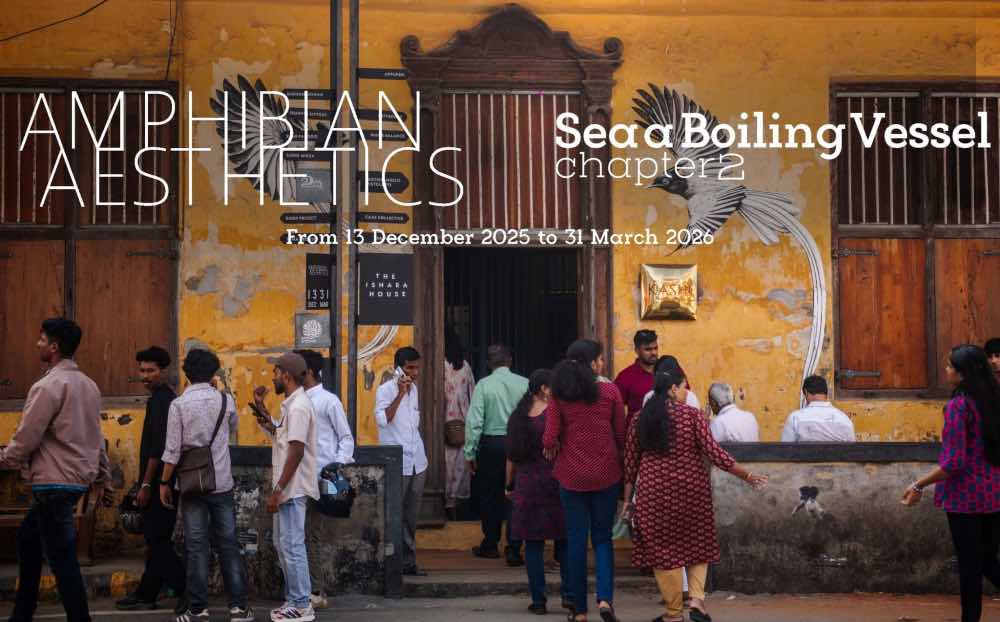
Extending from the long term inquiries of ‘Sea A Boiling Vessel’ that looked at Kerala’s liquid relationships with the world at large, we present a discussion from the conceptual framework of 'Amphibian Aesthetics - Art in the Age of Precarity', an emerging manifesto from Kochi, conceptualised by the team of Aazhi Archives under the artistic directorship of Riyas Komu and curatorial team of Dr. CS Venkiteswaran, Amrith Lal and Prof M H Ilias.
AAZHI ARCHIVES >>
The ‘contemporary’ is always what is to be or becoming, what is in constant flux and confluence, something not congealed in time or space but happening in/through both. This contemplation and grappling with the ever-changing configurations of time, space and context, has become all the more urgent and crucial, because of the fundamental and fatal transformation of all these in what is apprehended as the terminal phase of human history. The reality (a reality we have created) of this Anthropocene era of derangement and displacement we live with/in, is marked not by human achievements but by its ravages as evidenced in glacial melting, climate change, and recurring ecological disasters.
Like thousands of species that ‘development’ saw to extinction, today, human species itself is faced with precarity, one that is not limited to ecology, but extends to politics, economy and culture. Take for instance, the recent escalations in war and violence - like in Ukraine and Palestine: they do not even get sustained media attention, leave alone global protests or appeals for peace. In the economic sphere, global capital travelling at the light of speed spawns weird temporal experiences and devastating spatial realities. While the velocity of capital intensifies, shifting constantly from one place to another and gravitating to places of least resistance, the movement of labour is closely surveilled and controlled, This, in turn, occludes any form of mobilisation and consolidation of radical ideas and mass movements. In the realm of information, global circulation and virality have opened up opportunities for new forms of internationalism and political solidarities, but in actuality, it only systemically facilitates asphyxiating levels of surveillance by State and Capital, effectively functioning as the post-truth information architecture. As for art, while the market thrives - there is no dearth of biennales and triennials, galleries and museums, auctions and acquisitions - one rarely confronts a radical moment or organic movement in the global art scene.
How do we make sense of these contradictory pulls of survival and extinction, labour and capital, truth and information, commerce and art? In this spatiotemporal whirl we live through/in, how does one world one’s art, and situate one’s art practice? What does it mean to be ‘radical’ in these times? How does art address and express the deep derangements of our times? Does it not also lead to the critical question, where do we stand as a species, as sentient, planetary beings?
As Terry Smith asks, “Of most interest is the precise quality of what it might mean for a set of ideas or values, a practice, an institution or a relationship - indeed, a period, a “time” to be ours. The precarity that defines our times is evident, visible, immediate and immanent in all aspects of contemporary world and life: whether it be the vulnerability of labour vis-à-vis the surreal mobility of capital, the precarity of truth in social media times, the excess of art production/exhibition without any rumblings of the radical, the diabolical consensus of right wing politics at the micro and macro levels of society both in the Global South and North.
At the other end of the planetary spectrum, take any life form, all of them are either under severe threat of extinction or vulnerable to weird mutations. Precarity of life extends to thinking too, rendering obsolete earlier modes of binary imagination like tradition/modernity, Oriental/Occidental, Terrestrial/Oceanic, Colonial/Post-colonial, Man/Woman, Left/Right etc. One needs to address the entangled reality of our times by seeking rhizomic modes of thinking, we need an amphibian aesthetics that inhabits and finds sustenance in land and sea, past and present, and traverses all the shades of gender and race, region and religion. To be amphibious is to be aware of life and the world as a force field of energies, a web and weave of materialities and immaterialities, actions and thoughts, harmonies and ruptures. As Joanna Zylinska reminds us, “The post-anthropocentric ethics of expanded obligations becomes a way of taking responsibility, by the human, for various sorts of thickenings of the universe, across different scales, and of responding to the tangled mesh of everyday connections and relations.”
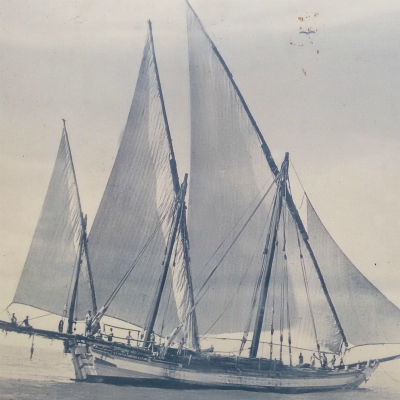
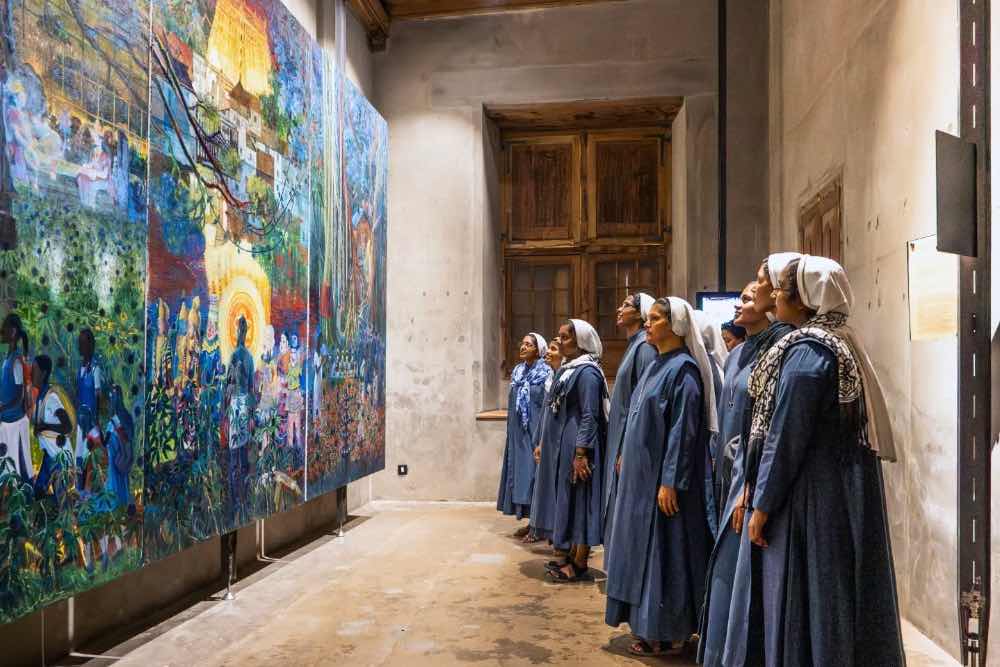
The first chapter of Sea a Boiling Vessel (2022-23) curated by Aazhi Archives at Kochi was an attempt to look at various the ebb and tide of oceanic movements, and of sea-borne terrestrial formations - social, political, cultural, artistic etc - through centuries of navigation, exploration, trade and colonialism. It featured different modes of interactions between land and sea: the various waves of colonial invasions, voluntary and forced migrations, trade and commerce, and spiritual journeys and shipwrecks. The show traced the marks and traces of the conflicts and confluences, conversations and conversions, rejections and adaptions that left their traces in various aspects of Malayalee life, polity and culture. For instance, the series of church murals in Kerala pose global art history in a different light, in terms of the transmigrations and adaptions of figures and symbols, as well as the aesthetic and material choices involved in it. The show explored the different ways in which the migration to the Middle East transformed not only Kerala’s economy and consumption patterns, but also its culture, architecture, cuisine and sartorial tastes. Not only men and women, ambitions and dreams, hopes and frustrations too crossed the seas and brought home different forms of ‘worldly’ imaginations. The poignant portraits of Chavittunatakam artistes standing in colourful attire in front of their dilapidated shacks, remind us not only about the current state of an ancient maritime art form, but also about the havoc that climate change and rising ocean levels have wreaked up on fragile life systems.
The show explored the very crucial, but often ignored, dimensions of maritime movements and oceanic imaginations, opening up new ways of understanding the hitherto invisible circuits of material, cultural and spiritual circulation. Even while focusing on the oceanic and the maritime, the explorations lead us to the essentially amphibian nature of our life-world. Only by reinventing the amphibian potential in us can we seek and find modes of collaborative survival in our planet - of terrestrial and oceanic imaginations, different species and life forms, organic and inorganic entities.
Amphibian (noun): any animal that can live both on land and in water. Amphibians have cold blood and skin without scales. Frogs, toads and newts are all amphibians.
The term amphibian is used for the class of animals that spend part of their lives in water and part on land. The word amphibian comes from the Greek word amphibios, which means “to live a double life”. The noun amphibian has its roots in the words amphi, meaning "of both kinds, " and bios, meaning "life." According to Thomas Aquinas, human beings are metaphysical amphibians: they live both in the corporeal world of rocks and trees and in the immaterial world of the intellect.
Melting ice and rising oceans on the one, and the rising levels of pollution and temperatures on land on the other, force us to seek amphibian solutions, and to reinvestigate survival strategies of both life forms and cultures. For instance, the present state of ecological precarity can be instantiated by taking two of the most ancient and tiniest of plant and animal life forms as examples: mushrooms and frogs. Anna Tsing, in her study, talks about mushrooms and their ability to realise possibilities of coexistence within extreme environmental disturbances. In her pursuit of mushrooms, she finds herself “ ...surrounded by patchiness, that is, a mosaic of open-ended assemblages of entangled ways of life, with each further opening into a mosaic of temporal rhythms and spatial arcs. I argue that only an appreciation of current precarity as an earthwide condition allows us to notice this - the situation of our world.” Her work focuses on disturbed ecologies, where ‘many species sometimes live together without either harmony or conquest’. We have a lot of bitter lessons to learn from the mushrooms, both of devastation and optimistic ones of survival. Another example of precarity is frogs, thousands of whose endemic species that survived for centuries in the Indian region that are facing the threat of extinction.
Isn’t it appropriate to start from the survival and resilience of the tiniest of organisms to understand the spatiotemporal disturbances at the macro, planetary levels? Amphibian frogs know better about survival on land and water, above and below the earth. Let us start listening to the frogs and follow the trails of mushrooms. It is not the romantic notion of ‘return to nature’, but a return to nature, that too, of the self-conscious Anthropocene.
Amphibian aesthetics is about being sensitive to intricate, sometimes invisible, but life-sustaining and crucial, entanglements of life/economy/culture. It is a way of looking at the world as an inter-connected, ever-evolving process, of being aware about how our roots underneath are all entangled together. The Ambhibian mode doesn’t valorise or pit one orientation/idea against another. Instead it seeks to understand ways in which the exchanges and engagements, conflicts and compromises, between different modes and ways of being, different spatiotemporal configurations, evolve, sustain and fade; as to what holds them together and the ruptures they hold within them.
Amphibian Aesthetics also recognizes the potential of water, its presence and absence, quality, timings, pats and slaps in shaping human life, subjectivities, mobility, power and structural inequalities in a more intricate hydrosocial setting. How the social and hydrological are historically intrinsically related or how various forms of hydrosociality influences our daily life and its aesthetics forms to be one of the major concerns of this show. It pronounces the need of multiple and composite methods for knowing about social life and its embedded-ness in the liquid environment. In devising ways of understanding these relationships aesthetically, this show employs a multi-sited - oral, textual, visual, digital and virtual - expressions.
Amphibian Aesthetics homes in on a multispecies imagination; human, pisces, animal, and avian ecologies, their rhythmic or conflictual spatiotemporal patterns, shared environs, political ecologies and their volatile transformations. By expanding the scope of agency and subjectivity, this project takes perception, experience, sense of self and interiority as something not limited to humans alone. Through a set of experimental juxtapositions, this show pushes a new line of thinking in art and academics, a line which is as inclusive and porous as an ecosystem, as mobile as its inhabitants, as deep as the water surrounds it.
Amitav Ghosh, The Great Derangement: Climate Change and the Unthinkable. University of Chicago Press. (2016)
Anna Lowenhaupt Tsing - The Mushroom at the End of the World _ On the Possibility of Life in
Capitalist Ruins, Princeton University Press (2015)
Changampuzha Krishna Pillai, Kavyanartaki (Malayalam)
Joanna Zylinska, Minimal Ethics for the Anthropocene, Open Humanities Press (2014)
Terry Smith - Art to Come_ Histories of Contemporary Art-Duke University Press (2019)
Timothy Morton, Being Ecological, Penguin Books (2018)
Urs Widmer, On Life, Death, and This and That of the Rest, Seagull, (2017)


Is dedicated to presenting contemporary art of South Asia. Located in Dubai, the Foundation supports emerging and established practices that advance critical dialogue and explore global interconnections.

Aazhi Archives is a collective of artists, writers and scholars engaged in education and art projects through research, art making, writing, curating, and publications.

URU art harbour is a cultural hub situated at Kochi. URU seeks to be a space for collaboration and a continual hub for artistic, cultural, and intellectual exploration. Founded by Riyas Komu and Zoya Riyas.

Riyas Komu is one of the prominent political artists in the contemporary times. His works question the existing disturbances in the social order. Komu's works include sculptures, installations, paintings, video etc.
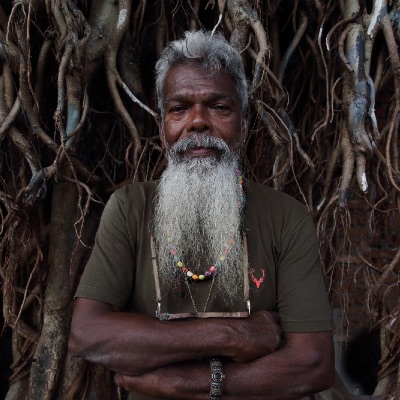
SHILPI RAJAN: FIGURE, FIELD & FACT
Aazhi Archives and Uru Art Harbour are proud to present Shilpi Rajan, one of the living legends from Kerala, a self-taught artist hails from Thrissur, create his sculptures from natural materials in spirit of making shapes, enduring life and humour layered with tragic marks.

Theyyam is a vibrant and colourful form of ritualistic worship that is deeply rooted in the culture and traditions of Kerala, India. This living tradition involves elaborate rituals, music, dance, and vibrant costumes that bring to life the divine spirits being invoked.
What if precarity is the condition of our time or, to put it an other way, what if our time is ripe for sensing precarity? What if precarity, indeterminacy, and what we imagine as trivial are the center of the systematicity we seek?
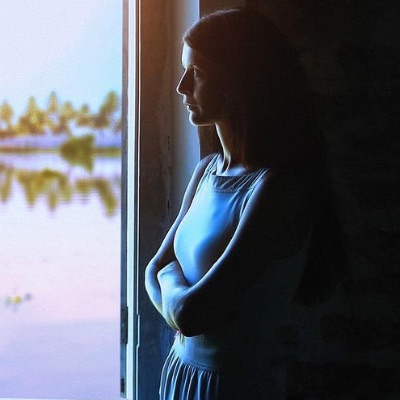
INDIA IN STYLE: 100 DAYS OF ART
India in Style, was created as part of Ayurveda Trails & Journals. During the Kochi-Muziris Biennale 2025-26, our founder Zuzana Zwiebel introduces one artist, event, or organisation every day, Here are the first 25 artworks. Let us inspire you!
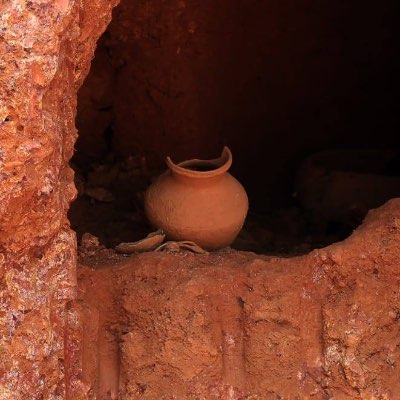
Can prehistoric artifacts be art? Come see for yourself at Kara in Fort Cochin! Mohamed A’s photographic images of excavations and the excavated - real, yet mysterious and enigmatic - take us on a journey into Kerala’s prehistoric past.

KOCHI-MUZIRIS BIENNALE 2025-26
The 6th edition of the KMB 2025 is curated by Nikhil Chopra with HH Art Spaces, an artist led organisation based in Goa. Chopra is a multidisciplinary artist whose practice interweaves performance, drawing, photography, sculpture, and installation.
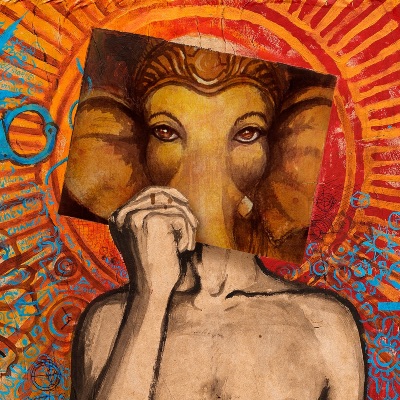
Ganesha is not for the artist a religious figure, it is a very personal almost incomprehensible connection, which has become a relationship that he commonly describes as being a mirror to the soul. Ganesha, in this case, is about portraying the image of a formless energy.

Chilean poet and featuring artist at the Kochi Muziris Biennale 2016 on the possibility of an artistic response to the human crises of our time, including the refugee crisis surrounding the conflict in Syria. The sea, which became a grave for hundreds of people, including children.
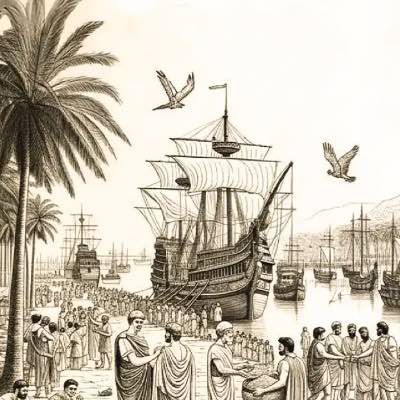
INTERNATIONAL SPICE ROUTE CONFERENCE 2026
Welcome to the First Edition of the Spice Routes Conference organized by the Muziris Heritage Project, Government of Kerala January 6-8, 2026 in Bolgatty Palace, Kochi. Step into a world where history, culture, and global connections converge.
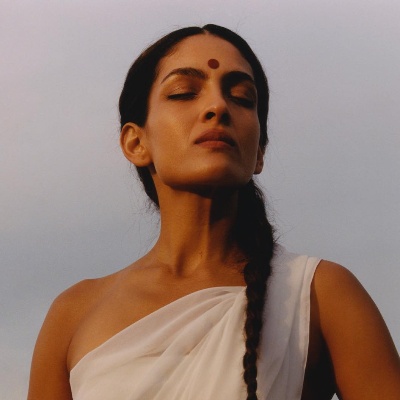
A new beginning is always infused with hope. Life is full of moments that we believe to be beginnings only because of the presence of hope. A physical symbol of these moments of hope is the flower. The films attempts to capture the emotion of these beginnings.
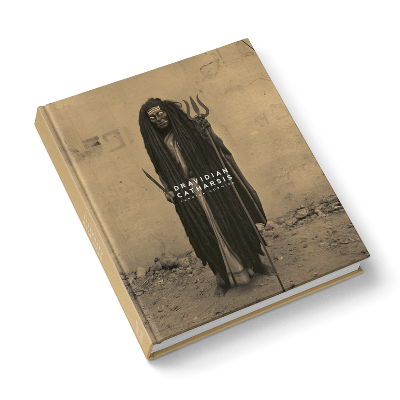
Dravidian Catharsis is the fruit of this deep immersion in the culture, the theatre, the traditions, and the soul of this mythological universe of the Tamil people. The powerful presences of spirits and living gods are embodied under masks.

Legend says that somewhere deep in the forest of the Himalayas is a strange bird that lays psychedelic eggs. Eating them will give you highly vivid hallucinations. The indigenous shamans believe that these visions are from your past life.
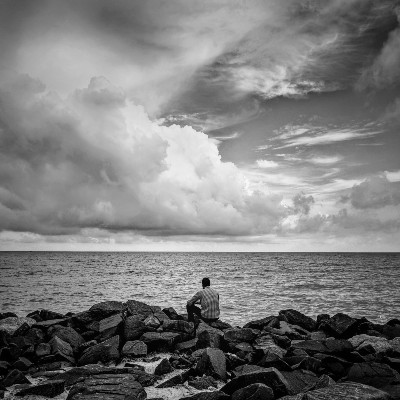
Ryuichi Sakamoto passed away this year on 28th March leaving behind a legacy of innumerable musical compositions that'll keep him alive in countless hearts across the world. However, I'll always be haunted by the fact that I couldn't let him know that I'm still alive because of his music along with many more.
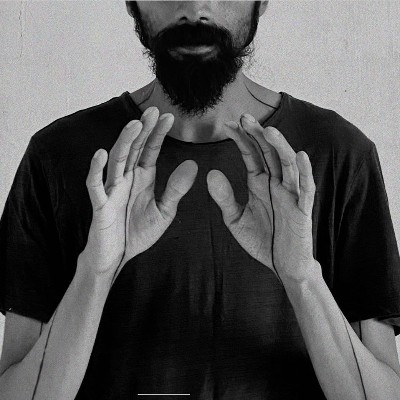
Search for the questions to the answers written on the skin...and i asked. am i connected to the deep inside you? with the invisible roots from the layered skin of you? all the energy you transfer to the heart of your thoughts?i asked again am i still connected?
01: Ayurveda in Travancore Kingdom
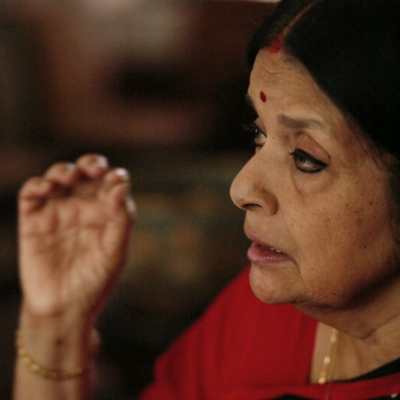
If you expect stories which starts: Once upon a time, there was a princess... stop reading. Her Highness Princess Gouri Parvathi Bayi of the Travancore Royal Family will introduce us very modern and open minded view on today's Kerala society and ayurveda.
Stories of communities about origin, spread and apocalypse being presented through episodic memories, narrative and visual texts, travel writings, murals, divine objects, church paintings, and songs provide a dense and myriad repository of historical and artistic imagination.