We use cookies to optimise our website functionality and give you the best experience possible. Please, accept our Terms and Conditions. ACCEPT
ARCHAEOLOGICAL PHOTOGRAPHY BY MOHAMED A
ARCHAEOLOGISTS: THE DESTROYERS
PHOTOGRAPHERS: THE CREATORS
Archaeological photography is both a scientific discipline and an aesthetic pursuit. Excavation is a documented destruction, said the great archaeologists of the yesteryears. Archaeologists carefully excavate sites and mounds with trowels and spades, uncovering traces of past lives layer by layer. Photographers, in turn, frame these unfolding moments-creating vivid visual records for both public engagement and scientific understanding. Here, the broken pottery, exposed structures, recovered materials, and the cultural dynamics of the past come alive through Mohamed's masterful lens.
Paleoart, the earliest form of humancommunication, served not only as visual expression but also as a medium for ritual practice. These painted and engraved images function as enduring archives of prehistoric period. Paleo art known as Rock Art is a very important archaeological vestige of Kerala. Kerala Rock Art includes rock paintings, rock engravings and geoglyphs. It is generally dated to Iron Age and historical period.
Rock paintings, created by applying pigment directly onto rock surfaces, are found at Marayur and Mattupetty. Rock engravings, known as petroglyphs, occur at Edakkal and Tovari. Geoglyphs, large-scale ground engravings made on lateritic surfaces, are recorded from Ettukudukka and several other sites. The Edakkal rock art was first documented by Fred Fawcett. Both the Edakkal and Marayur panels have been interpreted as representing shamanistic dance scenes-referred to in colonial writings as the Devil Dance. The prominent central figure and several accompanying motifs show striking resemblances to Theyyam imagery found in Kerala today.
Notably, certain figures at Edakkal identified by Raghava Varier resemble Indus script signs. A megalithic graffito of a bullock cart, found at Edakkal, also appears on pottery from Anakkara, suggesting cultural continuity and shared symbolic traditions. Many engravings depict wild animals and hunting scenes, pointing to the activities of early hunter-gatherer communities. Some geoglyphs may reflect the presence of pastoral groups, perhaps marking the movement or grazing practices of cattle on the lateritic uplands.
Dated between 1000 BCE and 500 CE, with later contributions from the Megalithic tradition, these monuments broadly belong to the Iron Age and Early Historic Period.
Kerala is a land of mysterious megaliths. Menhirs, kodakkallus, toppikallus, urns (nannangadis), muniyaras (rock-cut chambers), cists, and dolmens mark the landscape, standing as enduring memorials to past communities. These structures were built as tributes to ancestors-living spaces for the dead- where people placed pottery, iron and bronze objects, and the bones of the departed. Through his lens, Mohamed transforms these monuments of the dead into monuments that live again, bringing their silent stories vividly into the present.
Located in Palakkad district, Anakkara is a unique megalithic site with evidence of microlithic artifacts dated to c. 25,000 BCE show that microlithic hunter-gatherers occupied this landscape long before the later megalithic communities.
Anakkara is notable among South Indian sites for containing both habitation and burial evidence. On the hilltop known as Ponnittanira a circular slab circle enclosed a rock-cut chamber; the chamber's multiple internal divisions are especially intriguing. The site was excavated by the School of Social Sciences, M.G. University, Kottayam. Within the village area, kudakkal (umbrella stone) and urn burials have been recorded. The kudakkal burial features four clinostats forming the chamber's sides, capped by a large capstone-the chamber was opened and systematically excavated.
Excavations recovered iron objects, pottery, human bones, and carnelian beads. The site also preserves evidence of laterite quarrying associated with megalithic burial construction.
Through careful, moment-by-moment documentation, Mohamed's Magic brings Anakkara's long human story into focus-revealing the everyday practices, funerary gestures, and material traces that connect past lives to the present.
The celebrated port of Muziris, located near the mouth of the Periyar River, was the coveted destination of sailors, traders, and fortune-seekers across the Indian Ocean world. Renowned for its prosperity-Valam Kezhu as praised in Akananuru 149, echoed again in the Periplus and by Pliny- Muziris flourished as a vibrant maritime hub of southern India on Kerala's west coast.
Today, the site is identified with Pattanam and its surrounding areas in the Periyar delta. Excavated by KCHR, Pattanam has yielded an extraordinary range of material cultural remains: amphorae, gems and semi-precious stones, torpedo jars, jewellery, beads, pepper, and countless other artifacts that illuminate its cosmopolitan past. Pattanam was a dynamic node where spice-rich hinterlands, the Periyar Valley, and the Western Ghats converged with the Greco-Roman, Arabian, and wider Indian Ocean worlds. It emerged as an urban centre that witnessed proto-globalization nearly 2,000 years ago.
Through his lens, Mohamed's Magic brings to life the fragmentary ruins and excavated remains of Pattanam-transforming buried history into a compelling visual experience. The site is dated between 400 BCE and 300 CE, with intermittent occupation continuing into the present.


Aazhi Archives is a collective of artists, writers and scholars engaged in education and art projects through research, art making, writing, curating, and publications.

URU art harbour is a cultural hub situated at Kochi. URU seeks to be a space for collaboration and a continual hub for artistic, cultural, and intellectual exploration. Founded by Riyas Komu and Zoya Riyas.

Captures the visual narrative of heritage, connecting ancient history with contemporary understanding through his lens, focusing on human stories within archaeological contexts.

He captures the essence of rustic geographies, the people who are now becoming archive of the earth, the mythic & mystery of spaces & places, alleys of now filled with the density of then or before.
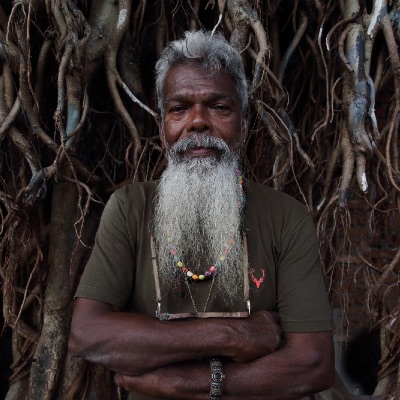
SHILPI RAJAN: FIGURE, FIELD & FACT
Aazhi Archives and Uru Art Harbour are proud to present Shilpi Rajan, one of the living legends from Kerala, a self-taught artist hails from Thrissur, create his sculptures from natural materials in spirit of making shapes, enduring life and humour layered with tragic marks.

Theyyam is a vibrant and colourful form of ritualistic worship that is deeply rooted in the culture and traditions of Kerala, India. This living tradition involves elaborate rituals, music, dance, and vibrant costumes that bring to life the divine spirits being invoked.
What if precarity is the condition of our time or, to put it an other way, what if our time is ripe for sensing precarity? What if precarity, indeterminacy, and what we imagine as trivial are the center of the systematicity we seek?
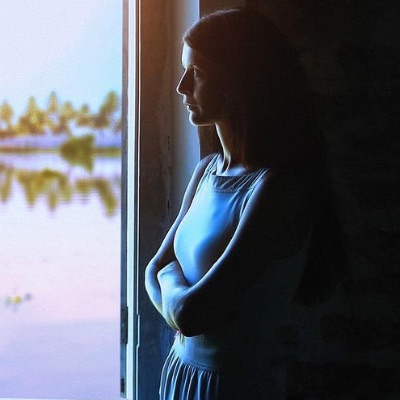
INDIA IN STYLE: 100 DAYS OF ART
India in Style, was created as part of Ayurveda Trails & Journals. During the Kochi-Muziris Biennale 2025-26, our founder Zuzana Zwiebel introduces one artist, event, or organisation every day, Here are the first 25 artworks. Let us inspire you!
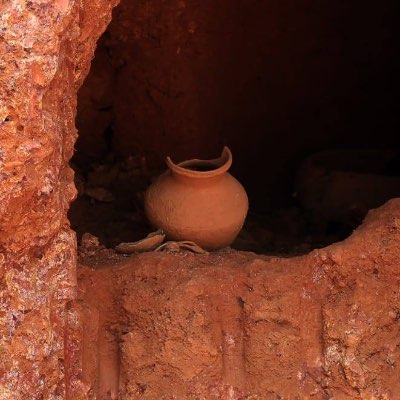
Can prehistoric artifacts be art? Come see for yourself at Kara in Fort Cochin! Mohamed A’s photographic images of excavations and the excavated - real, yet mysterious and enigmatic - take us on a journey into Kerala’s prehistoric past.

KOCHI-MUZIRIS BIENNALE 2025-26
The 6th edition of the KMB 2025 is curated by Nikhil Chopra with HH Art Spaces, an artist led organisation based in Goa. Chopra is a multidisciplinary artist whose practice interweaves performance, drawing, photography, sculpture, and installation.
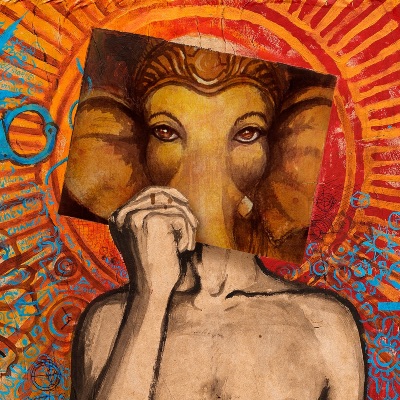
Ganesha is not for the artist a religious figure, it is a very personal almost incomprehensible connection, which has become a relationship that he commonly describes as being a mirror to the soul. Ganesha, in this case, is about portraying the image of a formless energy.

Chilean poet and featuring artist at the Kochi Muziris Biennale 2016 on the possibility of an artistic response to the human crises of our time, including the refugee crisis surrounding the conflict in Syria. The sea, which became a grave for hundreds of people, including children.
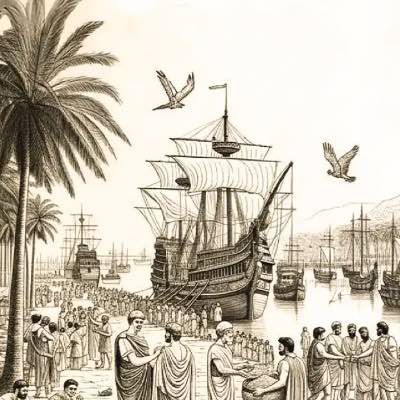
INTERNATIONAL SPICE ROUTE CONFERENCE 2026
Welcome to the First Edition of the Spice Routes Conference organized by the Muziris Heritage Project, Government of Kerala January 6-8, 2026 in Bolgatty Palace, Kochi. Step into a world where history, culture, and global connections converge.
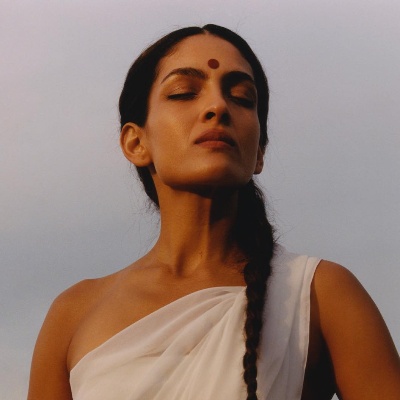
A new beginning is always infused with hope. Life is full of moments that we believe to be beginnings only because of the presence of hope. A physical symbol of these moments of hope is the flower. The films attempts to capture the emotion of these beginnings.
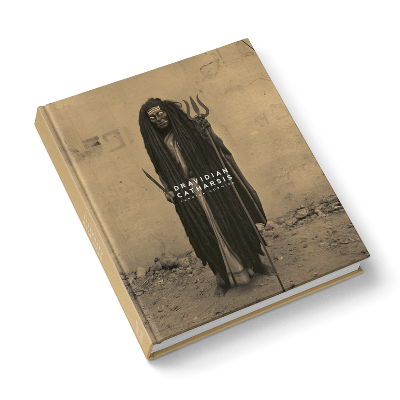
Dravidian Catharsis is the fruit of this deep immersion in the culture, the theatre, the traditions, and the soul of this mythological universe of the Tamil people. The powerful presences of spirits and living gods are embodied under masks.

Legend says that somewhere deep in the forest of the Himalayas is a strange bird that lays psychedelic eggs. Eating them will give you highly vivid hallucinations. The indigenous shamans believe that these visions are from your past life.
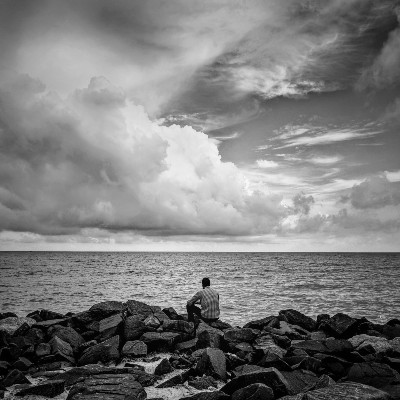
Ryuichi Sakamoto passed away this year on 28th March leaving behind a legacy of innumerable musical compositions that'll keep him alive in countless hearts across the world. However, I'll always be haunted by the fact that I couldn't let him know that I'm still alive because of his music along with many more.
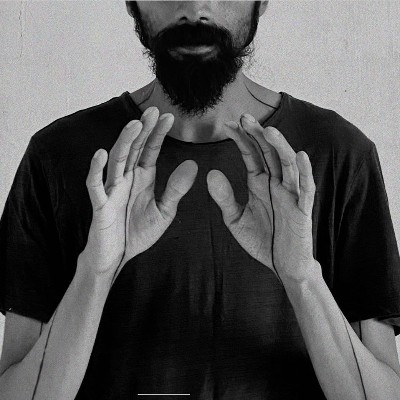
Search for the questions to the answers written on the skin...and i asked. am i connected to the deep inside you? with the invisible roots from the layered skin of you? all the energy you transfer to the heart of your thoughts?i asked again am i still connected?
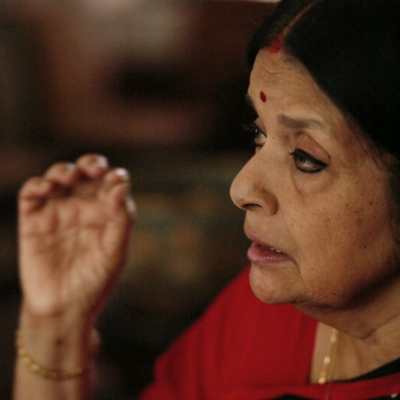
01: Ayurveda in Travancore Kingdom
If you expect stories which starts: Once upon a time, there was a princess... stop reading. Her Highness Princess Gouri Parvathi Bayi of the Travancore Royal Family will introduce us very modern and open minded view on today's Kerala society and ayurveda.
Stories of communities about origin, spread and apocalypse being presented through episodic memories, narrative and visual texts, travel writings, murals, divine objects, church paintings, and songs provide a dense and myriad repository of historical and artistic imagination.